
 Facebook
 X
X LinkedIn
 Forward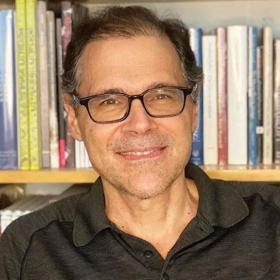
Xenophobia, War, and the Problem of Social Disorder: Keynote of the 64th Annual Meeting of the Rapaport-Klein Study Group - George Makari, MD (Webinar live online)
This Webinar will not be recorded and will not be available for enduring course CE/CME
Keynote of the 64th Annual Meeting of the Rapaport-Klein Study Group
hosted by the Erikson Institute for Education, Research, and Advocacy of the Austen Riggs Center
In Of Fear and Strangers, George Makari, MD, considered how different psychological models – behaviorist, cognitive, phenomenological – accounted for xenophobia, and in the end, considered psychoanalytic theories of projection to most clearly define the most intractable form of this problem. With ethnonationalism and militarism on the rise around the world, Dr. Makari wanted to explore the social conditions that fostered such projected hatred. For that, he turned to Einstein and Freud’s 1932 exchange, “Why War?”. In Freud’s brief letter, he proposed a model for collectives, in which the problem of self-defense and the risk of social disintegration were central. How, we might ask, does this model apply to our present?
Target Audience
_________ Introductory ___X_____Intermediate___________Advanced
Learning Objectives
Understand the forms of xenophobia through different psychological models
Understand the psychoanalytic model of projection and its relationship to xenophobia
Understand the way social collectives can seek to maintain unity through projective processes
Course summary
- 1.50 AMA PRA Category 1 Credit™

ACCME - As a Jointly Accredited Organization, The Austen Riggs Center, Inc. designates this learning activity for a maximum of 1.50 AMA PRA Category 1 Credit™. Physicians should claim only the credit commensurate with the extent of their participation in the activity.
- 1.50 APA
As a Jointly Accredited Organization, The Austen Riggs Center, Inc. designates this learning activity for 1.50 continuing education credit(s) (CE) for psychology. Continuing Education (CE) credits for psychologists are provided through the co-sponsorship of the American Psychological Association (APA) Office of Continuing Education in Psychology (CEP). The APA CEP Office maintains responsibility for the content of the programs.
Austen Riggs Center, Inc. is recognized by the New York State Education Department’s State Board for Psychology as an approved provider of continuing education for licensed psychologists #PSY-0115.
- 1.50 ASWB-ACE
 As a Jointly Accredited Organization, The Austen Riggs Center, Inc is approved to offer social work continuing education by the Association of Social Work Boards (ASWB) Approved Continuing Education (ACE) program. Organization, not individual courses, are approved under this program. State and provincial regulatory boards have the final authority to determine whether an individual course may be accepted for continuing education credit. Austen Riggs Center maintains responsibility for this. Social workers completing this Online live will receive 1.50 continuing education credit(s).
Austen Riggs Center, Inc is recognized by the New York State Education Department's State Board for Social Work as an approved provider of continuing education for licensed social workers #SW-0843.
- 1.50 Contact Hours/ ParticipationA certificate of attendance for all Learners.
Historian, essayist, psychiatrist, and psychoanalyst, George Makari, MD is professor of psychiatry and director of the DeWitt Wallace Institute of Psychiatry: History, Policy, and the Arts, and Professor of Psychiatry at Weill-Cornell Medical College. His latest book, Of Fear and Strangers: A History of Xenophobia was the recipient of the Anisfield-Wolf Book Prize, the Elisabeth Young-Bruehl Prize, was a New York Times Editor’s Choice and a Bloomberg Book of the Year. It was preceded by two award-winning histories, Soul Machine: The Invention of the Modern Mind and Revolution in Mind: The Creation of Psychoanalysis. His books have been or are being translated into thirteen languages. His essays have appeared in The New Yorker, The Atlantic, The New York Times, and many scholarly and literary journals. The recipient of numerous honors, Dr. Makari was presented with the Benjamin Rush Award from the American Psychiatric Association. A graduate of Brown University, Cornell University Medical College, and the Columbia University’s Psychoanalytic Center, he is a Guest Investigator at Rockefeller University. He teaches psychodynamic theory to the Payne Whitney Clinic residents and maintains a private practice in New York City.
Austen Riggs Center Inc. adheres to the ACCME’s Standards for Integrity and Independence in Accredited Continuing Medical Education. All those at Austen Riggs Center involved in the planning of this activity, including the presenter(s) listed above, report they have no relevant financial relationships with an ineligible company*.
The views and opinions expressed in this presentation are those of the presenter(s) and do not necessarily represent the official policy or position of the Austen Riggs Center.
* An ineligible company is any entity whose primary business is producing, marketing, selling, re-selling, or distributing healthcare products used by or on patients.
Available Credit
- 1.50 AMA PRA Category 1 Credit™
ACCME - As a Jointly Accredited Organization, The Austen Riggs Center, Inc. designates this learning activity for a maximum of 1.50 AMA PRA Category 1 Credit™. Physicians should claim only the credit commensurate with the extent of their participation in the activity.
- 1.50 APA
As a Jointly Accredited Organization, The Austen Riggs Center, Inc. designates this learning activity for 1.50 continuing education credit(s) (CE) for psychology. Continuing Education (CE) credits for psychologists are provided through the co-sponsorship of the American Psychological Association (APA) Office of Continuing Education in Psychology (CEP). The APA CEP Office maintains responsibility for the content of the programs.
Austen Riggs Center, Inc. is recognized by the New York State Education Department’s State Board for Psychology as an approved provider of continuing education for licensed psychologists #PSY-0115.
- 1.50 ASWB-ACE As a Jointly Accredited Organization, The Austen Riggs Center, Inc is approved to offer social work continuing education by the Association of Social Work Boards (ASWB) Approved Continuing Education (ACE) program. Organization, not individual courses, are approved under this program. State and provincial regulatory boards have the final authority to determine whether an individual course may be accepted for continuing education credit. Austen Riggs Center maintains responsibility for this. Social workers completing this Online live will receive 1.50 continuing education credit(s).
Austen Riggs Center, Inc is recognized by the New York State Education Department's State Board for Social Work as an approved provider of continuing education for licensed social workers #SW-0843.
- 1.50 Contact Hours/ ParticipationA certificate of attendance for all Learners.